CONTEXT
After spending four years in the education sector, I wanted to challenge myself in a completely new career but also environment. Joining Bridge.audio marked my first experience in the music industry as a designer.
What initially attracted me to the role was the opportunity to grow beyond traditional UX/UI execution and evolve into a more strategic product design role.
I started within a two-person design team under strong mentorship.
[WHAT I LEARNED]
[1]
how the music licensing industry operates
[2]
how product decisions are tied to business priorities
[3]
how to shift my mindset from designing isolated screens to designing systems that support company growth.
After six months, the structure of the team evolved and I became the sole Product Designer responsible for the platform.
Having already contributed to key product decisions and workflows, I was trusted to take ownership of the overall product experience and lead design decisions independently.
[This transition meant managing]
[1]
multiple product streams simultaneously,
[2]
stakeholder alignment
[3]
feature prioritisation
[4]
product workshops
[5]
UX research
[6]
delivery coordination with developers and leadershiP


Design Ownership
As the sole Product Designer, I was responsible for UX strategy, interface design, research, prototyping, stakeholder workshops and maintaining consistency across the product ecosystem.
my process
one of the biggest challenges was balancing multiple projects simultaneously while adapting to evolving priorities, limited research resources, and tight delivery timelines.
To create more structure around the growing scope of work, our team gradually shifted from monthly planning to a more consistent weekly product rhythm.
Some of the changes that improved our workflow included:
[001]
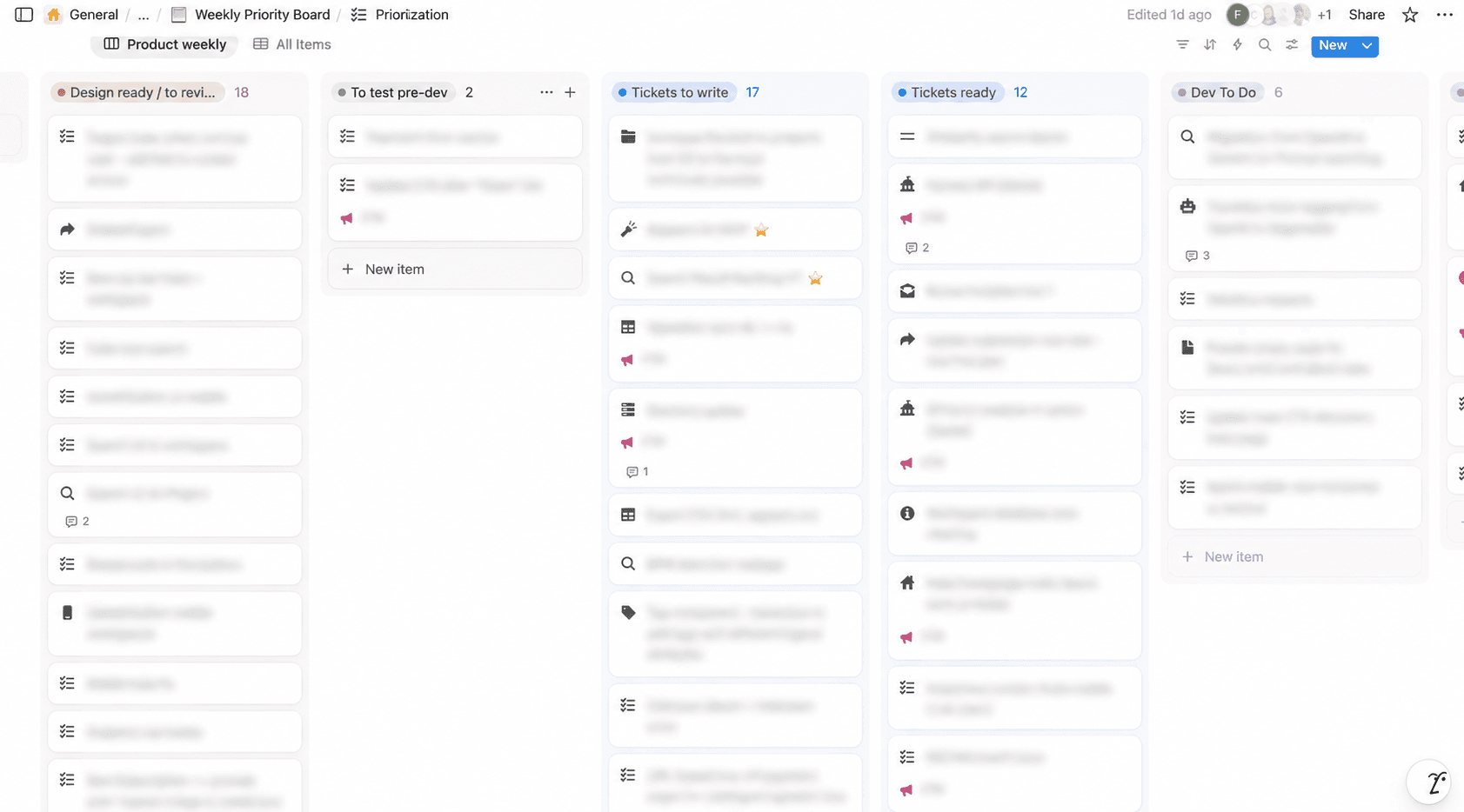
Weekly product planning and closer collaboration across product, design, development, and marketing.
[002]

INCREASEd user interviews & research.
[003]

Earlier feature planning and validation, allowing us to stay several months ahead of development.
WHAT ARE HUBS ?

The Hub is Bridge.audio’s music discovery ecosystem designed for professionals in film, television, advertising, and media. It brings together specialised marketplaces into one experience, using AI-powered tagging and creative metadata to help users find and license music quickly.
Despite the strength of the product, one of the main challenges was visibility. Many users interacted with the platform without fully understanding the Hub ecosystem, its value, or the opportunities connected to it.
Through benchmarking music marketplaces, SaaS products, and creative tools, I identified recurring friction points and opportunities for product development.
From these findings, I helped structure a clearer product roadmap focused around a shared north star:

WHAT CAN BE IMPROVED ?
[001]
DISCOVER
Increase Hub visibility and ENCOURAGE curator access requests.
[002]
PROMOTE
Introduce promotional touchpoints across metadata panels, settings pages, and empty states.
[003]
EDUCATE
Help USERS understand the COMMERCIAL value of AI tagging and the discovery hubs.
[004]
SIMPLIFY
Reduce friction when publishing tracks to the Hubs.
IMPACT
48% GROWTH IN HUB SUBSCRIPTION STARTS DURING THE ROLLOUT, FROM 29 IN JANUARY TO 43 PER MONTH IN APRIL.
64% more users reached Bridge’s subscription offers, from 526 to 860 monthly users.
45% MORE USERS REACHED THE SUBSCRIPTION PAGE THROUGH METDATA (207 → 301), WHILE JOURNEY COMPLETION ROSE FROM 10.4% TO 12.6%.
~100 USERS/MONTH SPENT 10+ MINUTES EXPLORING DISCOVERY HUBS CONTENT, AVERAGING AROUND 15 MINUTES PER USER.
Key Features & Product Decisions
[001]

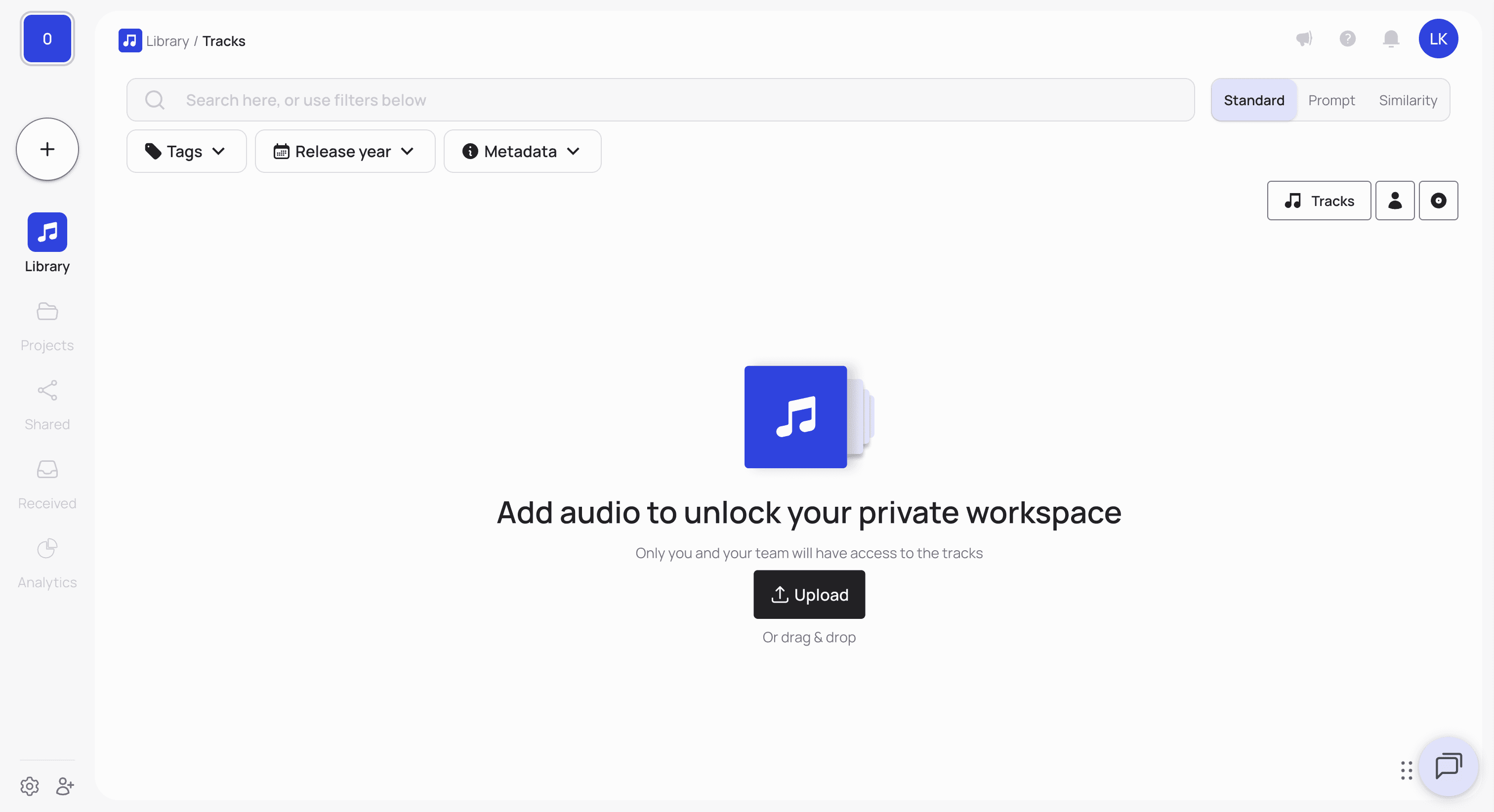
[PROBLEM]
The users' first interaction with the platform focused solely on uploading tracks, with little visibility into the features that made Bridge.audio valuable, such as AI tagging and the Hubs.
[SOLUTION]
I redesigned the empty state to introduce users to the wider Bridge.audio ecosystem from their first interaction.
WE ALSO updated the UX writing to highlight AI tagging and the Hubs, turning the upload screen into an opportunity to educate users and promote key features (AI-TAGGING, HUBS, FILE UPLOADS).
[002]

[PROBLEM]
Access to the Hubs is restricted to approved buyers, but the pathway to request curator access lacked visibility. As a result, potential buyers were often unaware of how to access the marketplaces.
[SOLUTION]
Introduced new entry points to the curator access request form within the main navigation, making the application process easier to discover and access.
[003]
[PROBLEM]
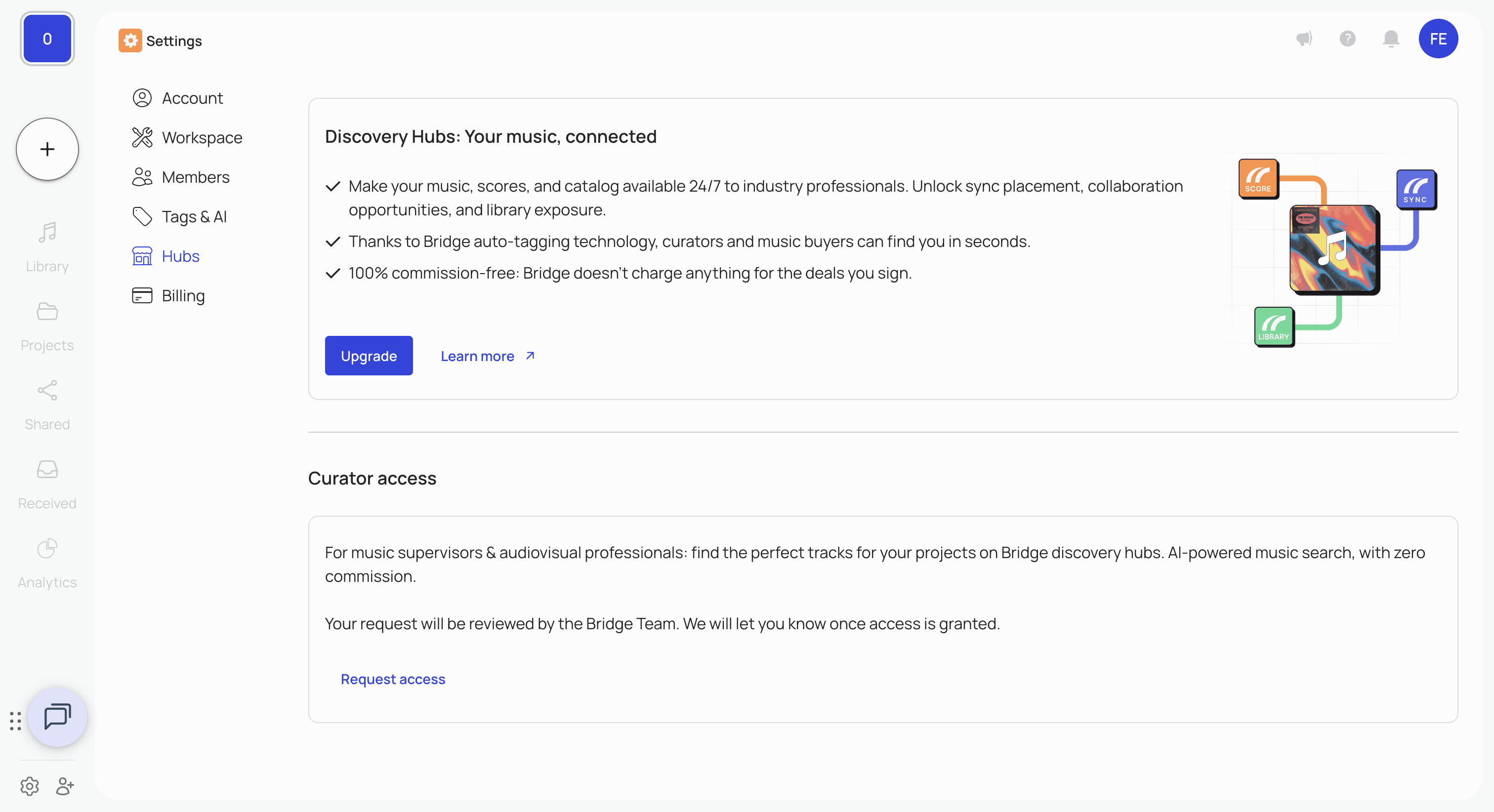
Users without Hub access could see Hub-related settings and publishing options, but these features were locked with little explanation. This created confusion around their purpose and left users unsure how to unlock them.
[SOLUTION]
Redesigned the experience to include promotional touchpoints that better explained the value of the Hubs and encouraged sellers to subscribe.
I also introduced a dedicated ENTRY POINT for buyers to request access to the Hubs directly from the settings page.
[004]

[PROBLEM]
After subscribing, sellers often struggled to understand how and where to publish their tracks to the Hubs, The experience lacked clear guidance and was slowing adoption.
[SOLUTION]
Made publishing to the Hubs easier to find by creating clearer pathways and introducing a more intuitive icon.
[005]

[PROBLEM]
Users lacked awareness of both the Hub ecosystem and the role AI tagging played in improving discoverability, limiting their understanding of how these tools could help promote their music.
[SOLUTION]
introduciED Hub touchpoints within metadata panel to highlight the value of AI tagging, improve discoverability, and promote Hub subscriptions.
I ALSO ADDED contextual tooltips to educate users about the different Hubs available and guide users toward the most relevant marketplace.
[006]

[PROBLEM]
Users lacked VISIBILITY ON which Discovery Hubs each track had been published to.
[SOLUTION]
Designed a new "Hubs" column that gives users an instant overview of where each track is published, reducing the need to open individual track details.
[007]
[PROBLEM]
Analytics had been one of the most requested features by rights holders.
While users received monthly reports, they lacked a simple way to monitor track performance directly within the platform, making it difficult to regularly measure engagement and understand which music resonated most.
[SOLUTION]
i Designed the first MVP of the Analytics dashboard, bringing Workspace and Discovery Hub engagement metrics directly into the product.
The experience focused on surfacing the most valuable insights, such as streams, top-performing projects and tracks, and DISCOVERY HUB activity, while remaining simple to DEVELOP and easy to understand.
To reduce the learning curve, I based the experience on Spotify for Artists a platform already familiar to many of our users.
As Jakob's Law suggests:
"Users spend most of their time using other products, so they expect yours to work in similar ways."
[008]

[PROBLEM]
Discovery Hub analytics are only available to subscribed users, so the experience needed to communicate the feature's value while encouraging users to subscribe.
[SOLUTION]
Consistent with the Hub Awareness strategy: rather than hiding premium features, I kept the Analytics page visible and transformed the empty state into a promotional experience that communicated the value of Discovery Hubs.
it makes the upgrade feel like a natural next step instead of a forced paywall.
WHAT I LEARNED
Over the course of this apprenticeship, I evolved from a UX/UI student entering a completely unfamiliar industry into the sole Product Designer responsible for end-to-end product experiences across the platform.
Working in a startup environment taught me how to balance user needs, business objectives, technical constraints, and fast-moving priorities simultaneously.
More importantly, it changed the way I approach design: not as isolated interfaces, but as a system that connects user experience, business goals, and long-term product vision.
The experience strengthened my product thinking, prioritisation, research, and cross-functional collaboration skills, while giving me the confidence to independently lead projects from discovery to delivery.
Most importantly, it allowed me to grow from simply executing design tasks to actively shaping product experiences, influencing decisions, and contributing to the overall direction of the platform.
